Commercial ice machine repair in Manhattan

Modular ice machines, undercounter ice makers, storage bins, and nugget or flake machines for restaurants, bars, hotels, offices and shops. Tell us the model, the symptom and whether ice is running out, and dispatch calls you back.

Commercial service · Manhattan & NYC

Local Manhattan team since 2020Licensed & insured technicians · Manhattan & NYC
Call +1 (929) 351-3230
  • EPA Section 608 certified
  • Licensed & insured
  • 90-day labor warranty
  • 30-day money-back guarantee

Labor warranty and money-back guarantee apply only to repairs performed by our technicians. Warranty on replacement parts depends on the supplier’s or manufacturer’s terms and applies only to parts installed by our technicians. Terms and conditions apply.

Out of ice during service? Choose ASAP in the request or call dispatch. ASAP requests get a priority call-back; an immediate visit cannot be guaranteed.


Brands

Commercial Ice Machine Brands We Service

A selection of the makes our technicians service. Logos only identify the equipment; Markovfam is an independent service company.

  • Icetro
  • Summit
  • Blue Air

We Service All Major Brands — Don’t See Yours? Contact Us.

Overview

Reliable Ice Starts with Clean Water and a Clean Machine

A commercial ice machine makes ice from water, so its output depends on three things: the quality and pressure of the water, the cleanliness of the water path, and a refrigeration circuit that can reject heat. When one of the three slips, production drops, ice looks cloudy or small, or the machine stops.

We repair ice machines and the bins and filtration around them. Scale and slime are as common as mechanical faults, so cleaning and descaling are part of many visits.

Symptoms

Common Commercial Ice Machine Problems

We check the water side and cleanliness first, because they cause most problems, then move on to the refrigeration circuit.

What each problem usually points to

  • No ice or very slow production

    Closed or restricted water supply, a clogged filter, a failed inlet valve or pump, a dirty condenser or a refrigeration fault. A full-bin sensor can also stop a machine that is otherwise healthy.

  • Small, hollow or cloudy ice

    Low water pressure, scale, a restricted distributor or poor water quality. The machine can be running while ice quality has already degraded.

  • Machine runs but ice does not release

    The harvest cycle is not completing. A water-level, thermistor or harvest-assist fault is possible, and scale on the evaporator makes it worse.

  • Water leaking or overflowing

    A failing inlet valve, a cracked reservoir or sump, a blocked drain, or a loose filter housing. The leak path is traced before parts are replaced.

  • Ice tastes or smells off

    Old filter cartridges, biofilm in the bin or water path, or contamination from nearby storage. Cleaning, sanitizing and a fresh filter often resolve it.

  • Machine freezes up or stops mid-cycle

    A heavy ice bridge across the evaporator can come from a water-flow or sensor problem. It is not a good idea to chip it off with tools.

  • Bin ice melts quickly

    A bin door left open, a damaged liner or a blocked bin drain lets ice melt and puts water where it should not be.

  • High noise, fan or compressor sounds

    Failing fan motors, a loose panel or a compressor under strain. A machine in a hot corner with a blocked coil runs hotter and louder.

Call +1 (929) 351-3230

Equipment

Types of Commercial Ice Machines We Repair

Pick the closest type in the request. The nameplate shows the make, the model and the daily production rating.

  • Modular ice machines

    A machine head that sits on a separate storage bin or dispenser, common in restaurants, bars and hotels.

    • Water pump, distributor and inlet valve
    • Harvest cycle and sensors
    • Condenser airflow and ambient heat
  • Undercounter ice makers

    Self-contained units with a built-in bin that fit beneath a counter at a bar, café or service station.

    • Limited ventilation under the counter
    • Scale in a small water path
    • Drain and bin-level controls
  • Ice storage bins

    Bins and dispensers that hold the ice for service. They are food-contact surfaces and need to drain properly.

    • Bin door, liner and drain
    • Dispenser motor, sensor and actuator
    • Bin-level control that stops the machine
  • Nugget and flake machines

    Machines that make soft nugget ice or flake ice for beverage service, food display and specialty uses.

    • Auger-driven evaporator, unlike cube machines
    • Auger motor, gear reducer and bearings
    • Scale and sanitation affect ice quality
  • Water filtration

    Filter housings, cartridges and treatment ahead of the machine, which protect the water path and affect taste and clarity.

    • Cartridge age and pressure drop
    • Leaking housings and fittings
    • Scale control for the local water
  • Cleaning and descaling

    Removing scale and biofilm from the water path with a cleaner approved for the machine, then sanitizing the food-contact areas.

    • Scale on the evaporator and water circuit
    • Slime in the bin and distributor
    • Typically scheduled about every six months or as the manufacturer specifies
  • Refrigeration and ice production problems

    When water and cleanliness are right but output is still low, the refrigeration circuit and the heat-rejection side are checked.

    • Condenser coil and fan
    • Refrigerant circuit and compressor
    • Hot-gas or harvest-assist components

Diagnosis

How We Diagnose Commercial Ice Machines

We start with the water and the cleanliness of the machine, then work toward the refrigeration side only when the earlier checks do not explain the fault.

  1. Check water supply and filtration

    Shut-off valves, supply pressure, filter condition and any leaks are checked. Many production problems start here.

  2. Look for scale and biofilm

    The evaporator, distributor, sump and bin are inspected. Scale and slime are documented and the cleaning plan agreed.

  3. Check ambient and heat rejection

    Room temperature, clearances and the condenser coil and fan are checked, because ice production falls when the machine cannot shed heat.

  4. Run the freeze and harvest cycles

    We watch the machine through a complete cycle and read sensors, level controls and valves to see where it stops.

  5. Test the refrigeration circuit

    When earlier checks do not explain the fault, the compressor, valves and charge are tested. EPA Section 608 certified technicians handle refrigerant work.

  6. Report the result

    We explain what we found and what was done, and review the quote with you before repair work starts.

Water and cleaning

Water Filtration, Descaling and Ice Machine Cleaning

New York City water is relatively soft, but an ice machine freezes thousands of gallons a year, and the minerals that remain still build up as scale. Scale slows freezing, makes harvest unreliable and gives ice a cloudy, uneven look. A filter ahead of the machine reduces sediment and taste problems, but cartridges lose capacity as they load and water pressure drops with them.

Cleaning and descaling are different jobs. Descaling removes mineral deposits from the water circuit with an approved, machine-safe cleaner. Sanitizing then addresses the food-contact areas in the machine and the bin. Following the manufacturer’s schedule keeps both under control.

If you are not sure when the filter or the machine was last serviced, say so in the request. We can look at the water path and tell you what we see.

  • Filter cartridges: replace on the manufacturer’s schedule or when flow drops.
  • Descaling: removes scale from the water circuit and evaporator.
  • Sanitizing: cleans food-contact areas in the machine and the bin.
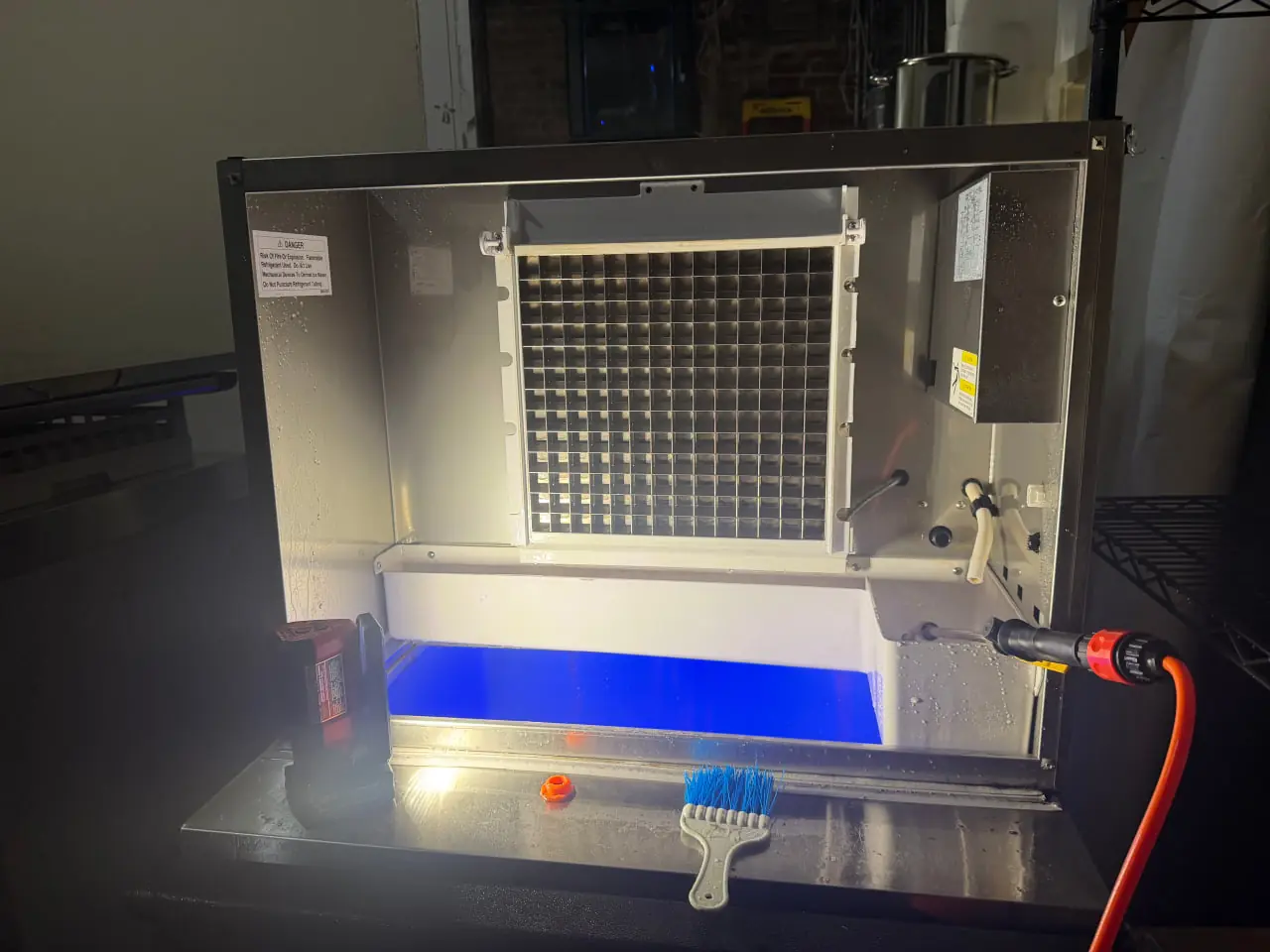
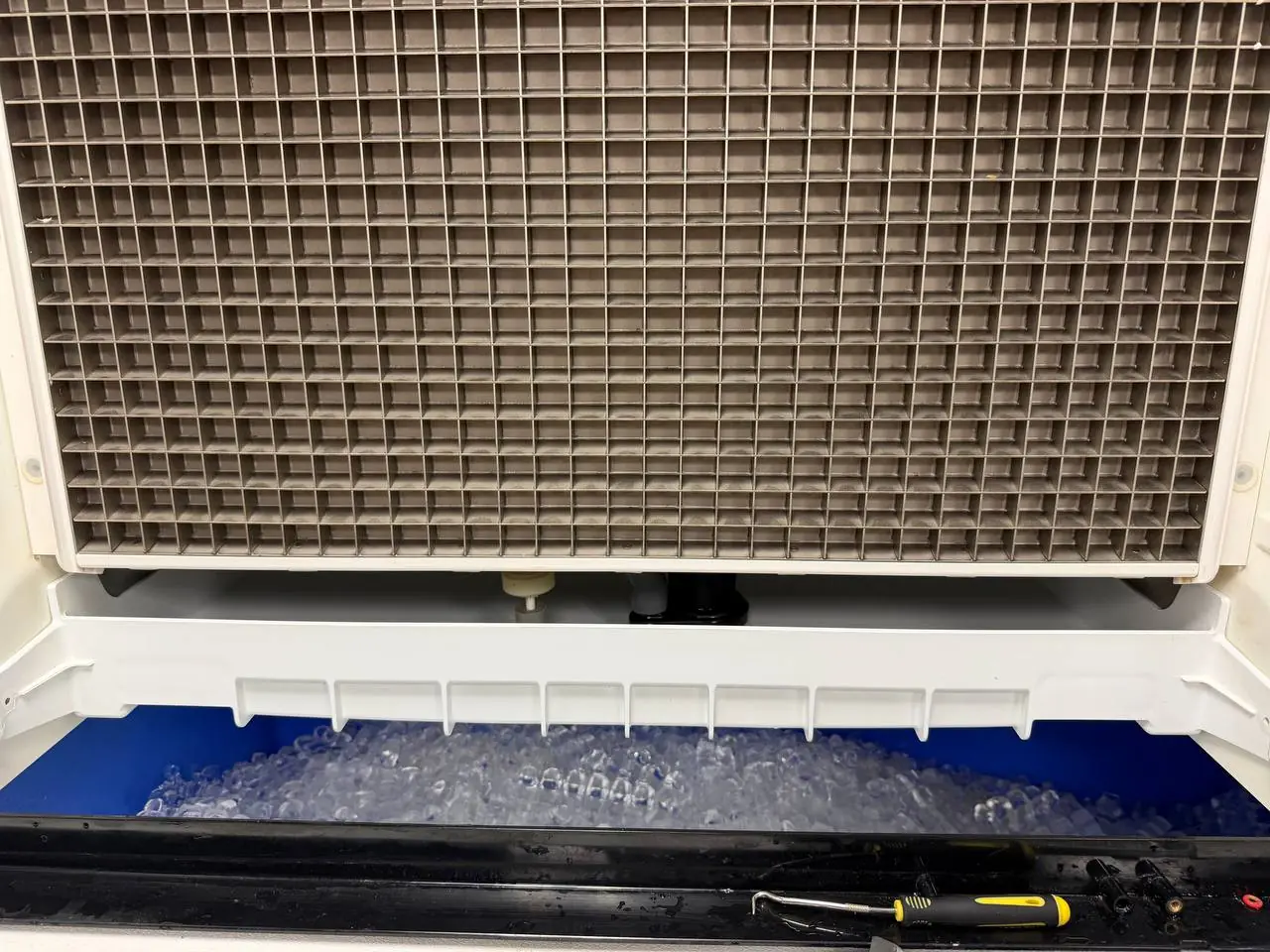
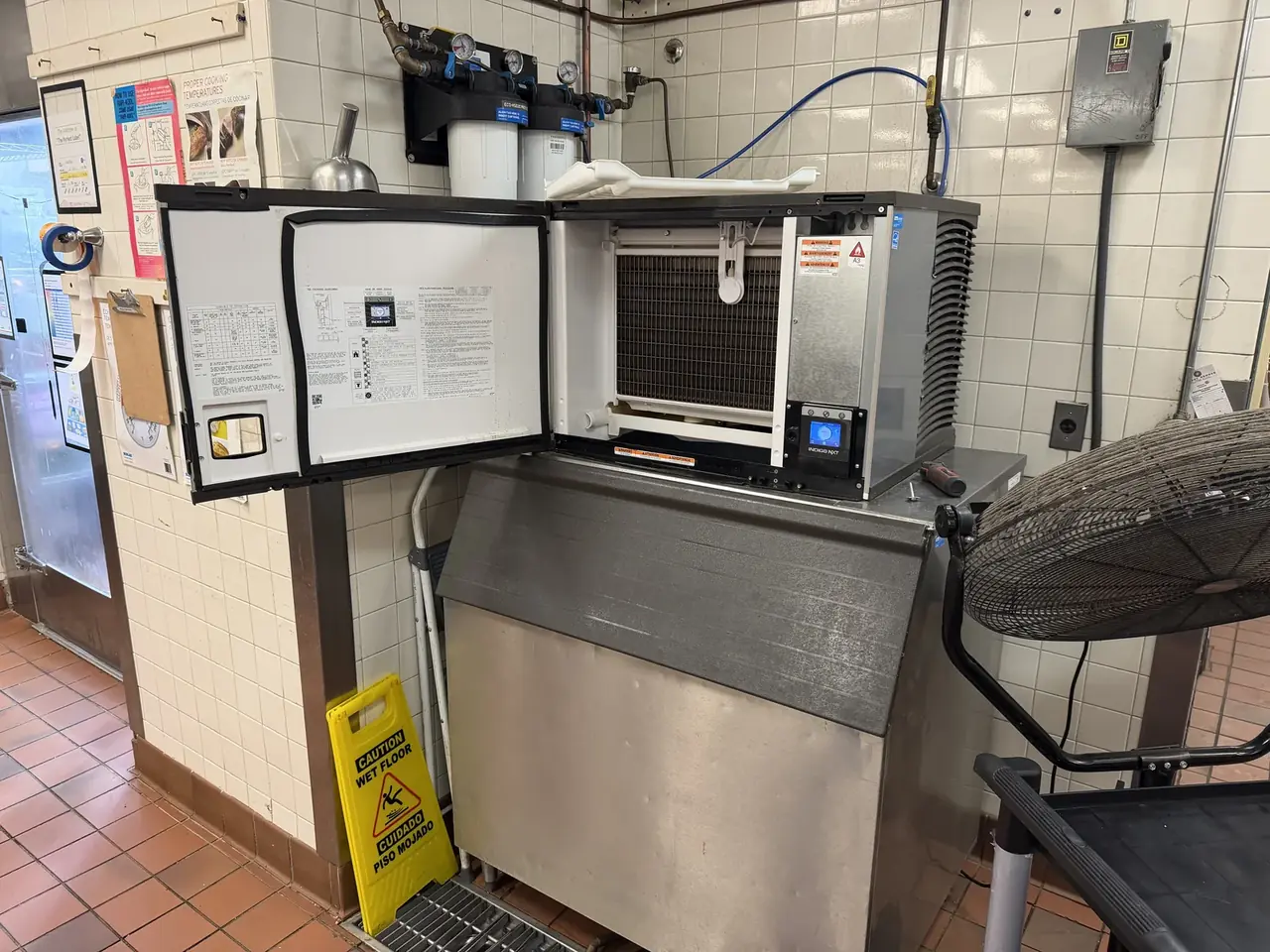
Commercial ice machine with its front panel off, showing the evaporator grid and water trough, with a cleaning brush on the base
Evaporator compartment opened, with a cleaning brush at hand

From the field

Commercial Ice Machines We’ve Serviced

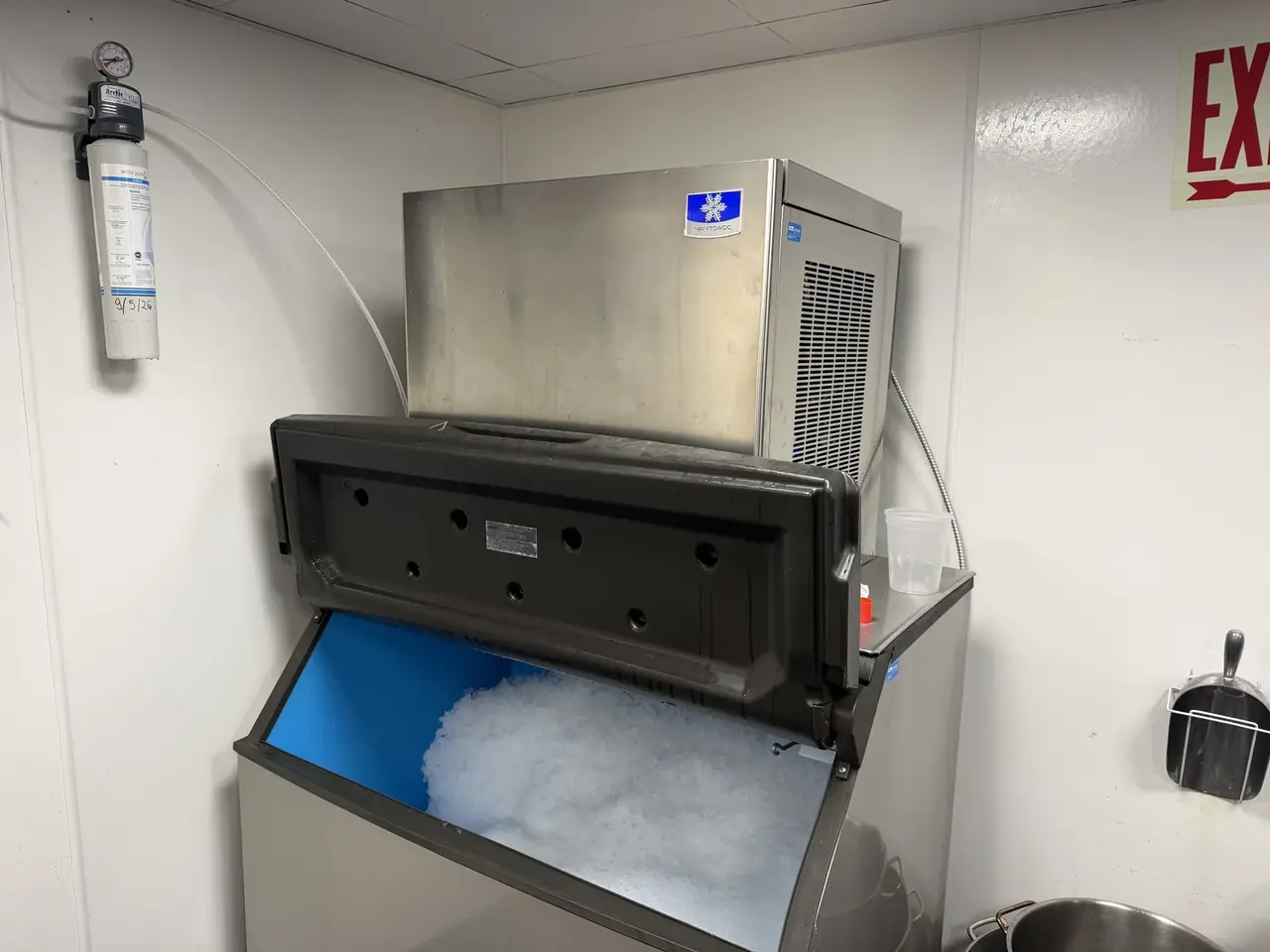
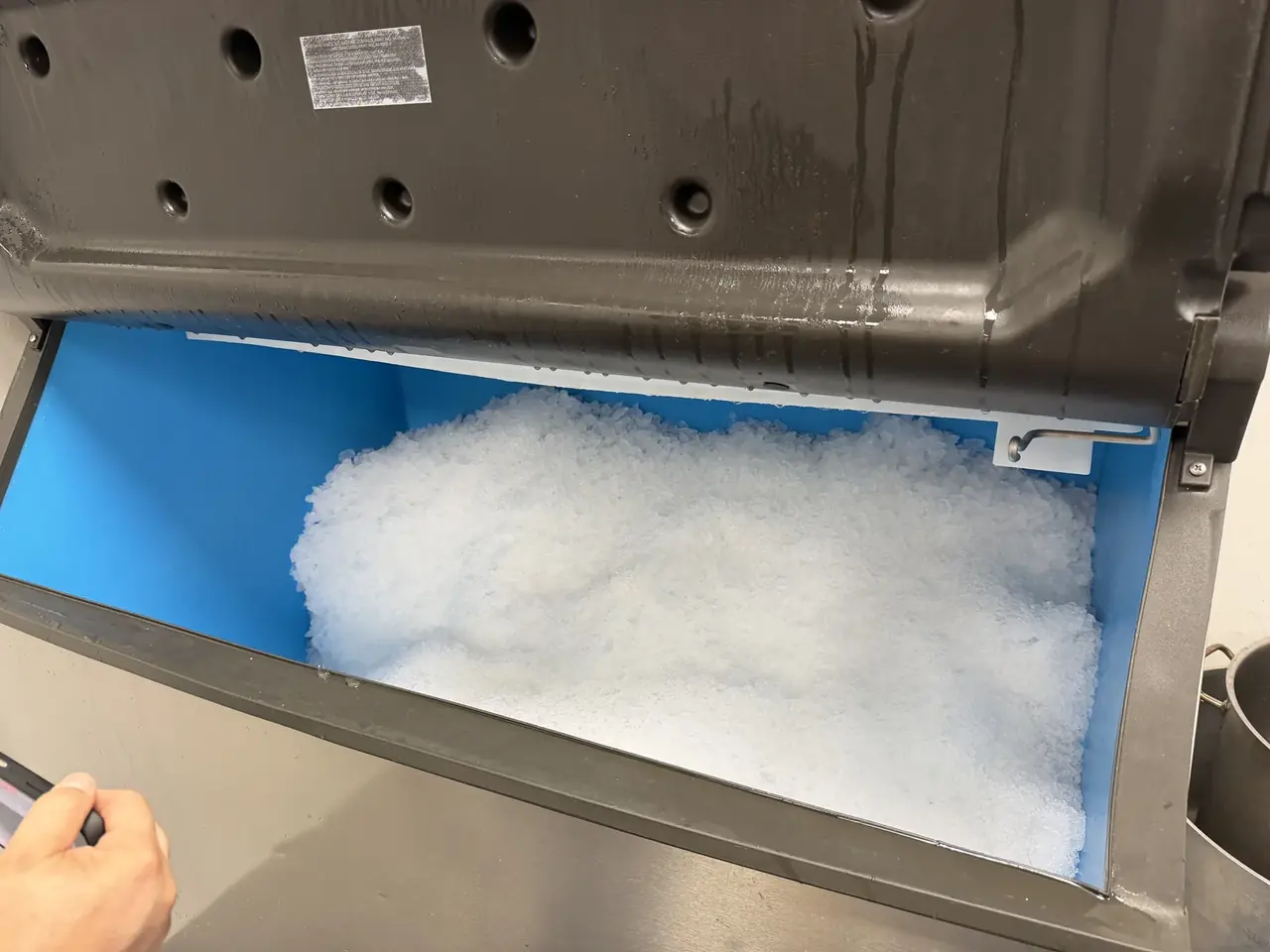
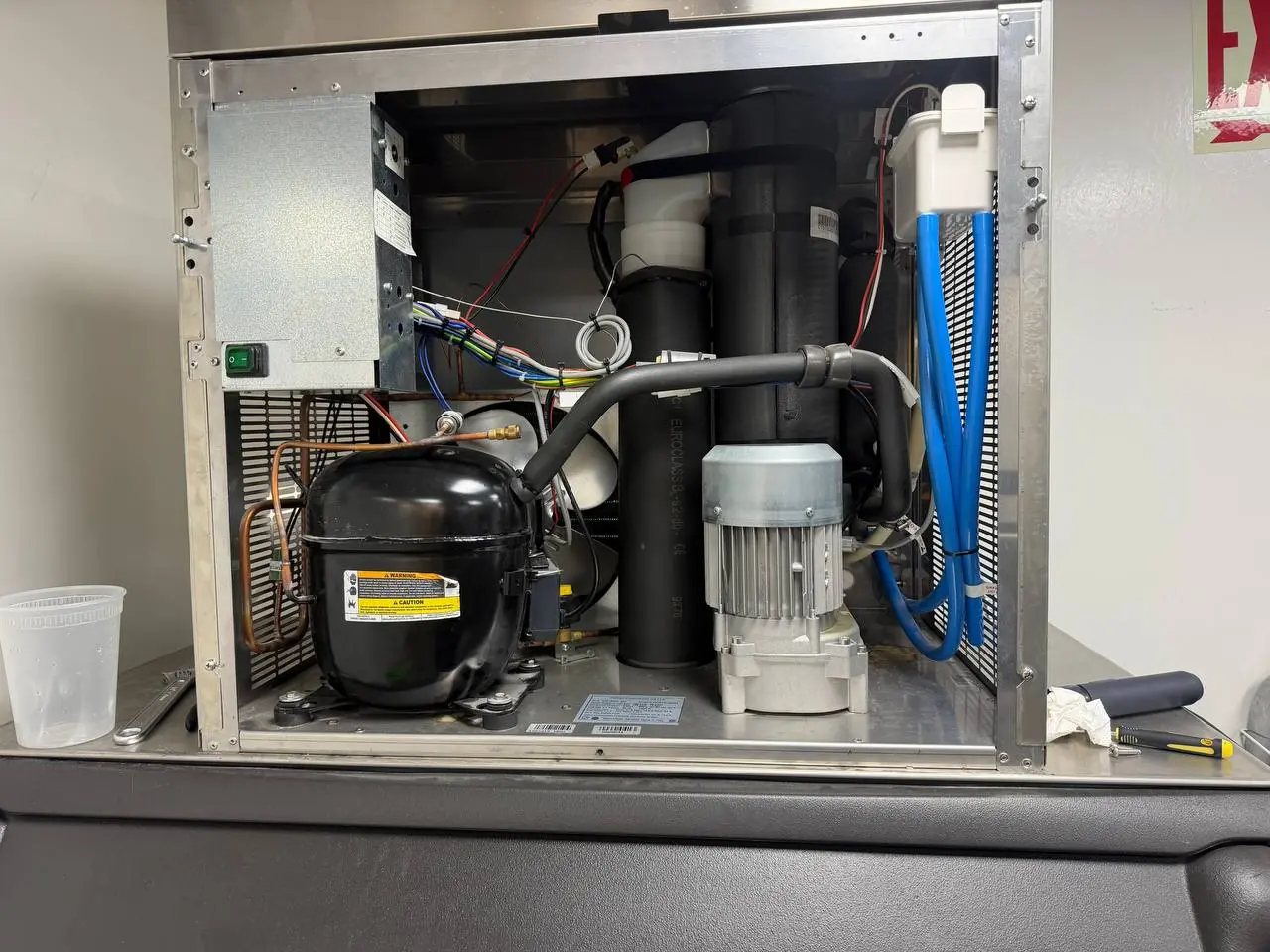
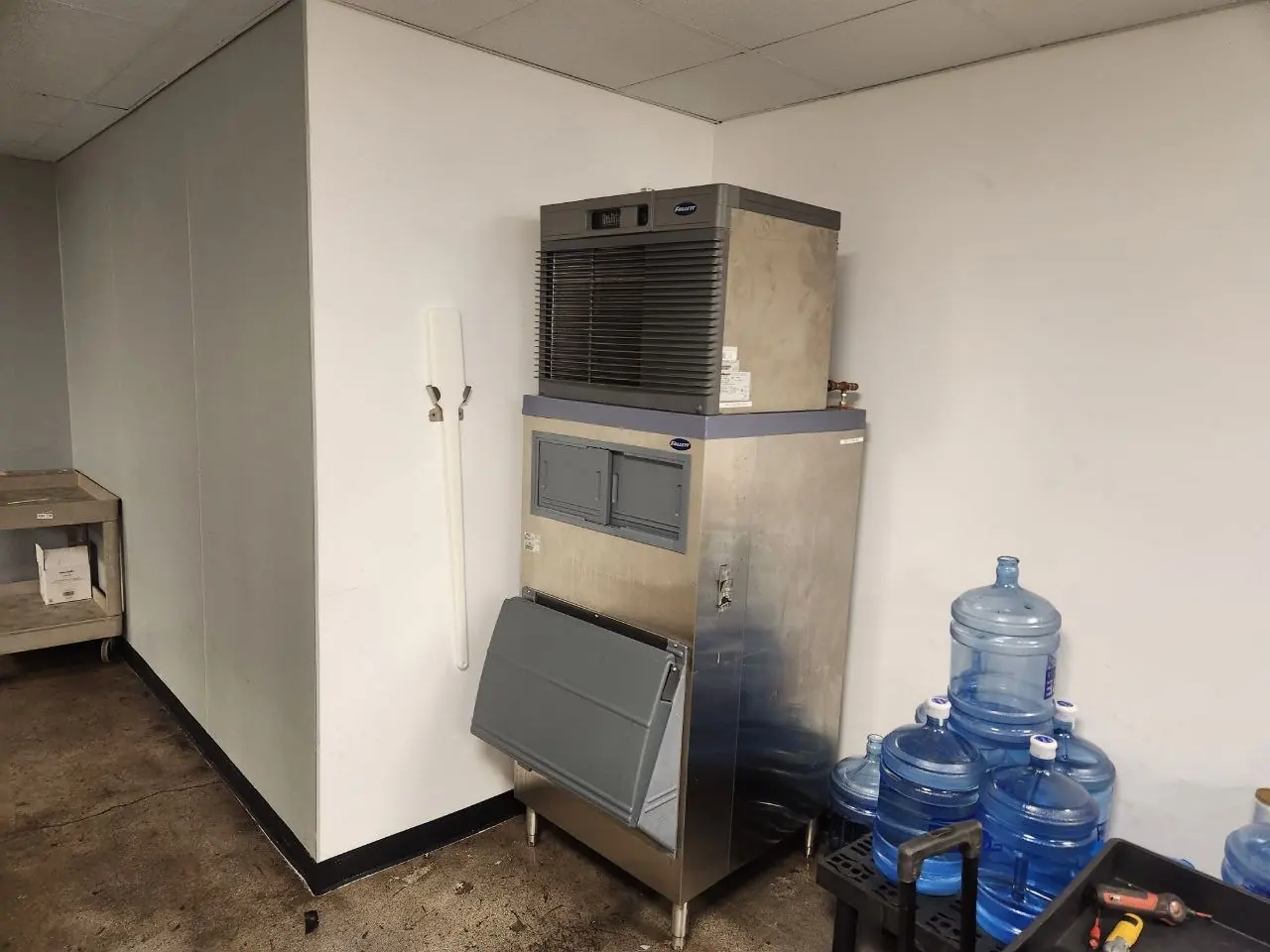
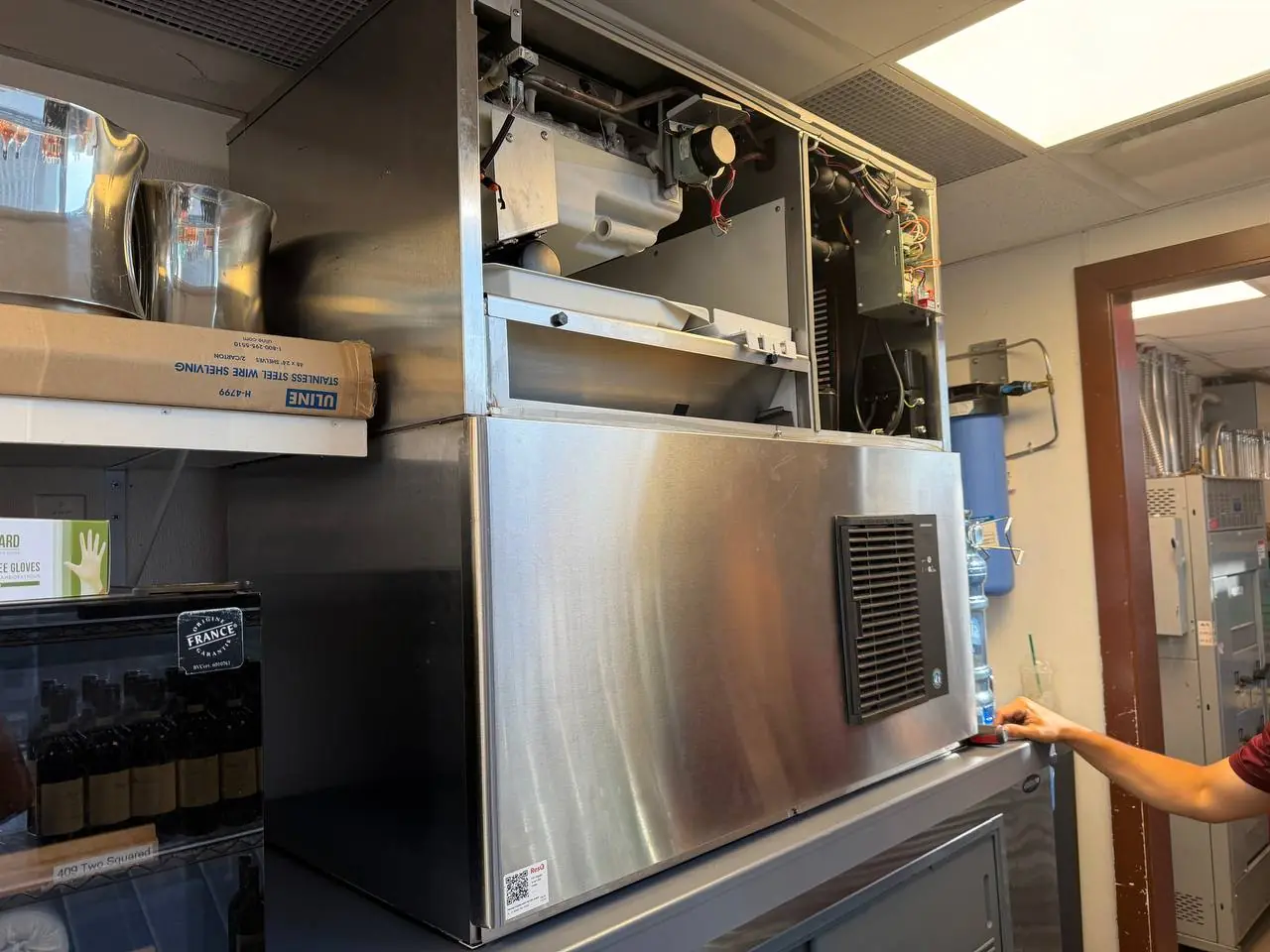
Ice machines and bins from commercial kitchens where our technicians have worked. Captions describe the equipment shown.

Building access & COI

Building Access & COI Requirements

Many Manhattan buildings require a certificate of insurance and a scheduled access window before a contractor can work on site. Include those details in your request so dispatch can plan the visit.

  • Choose COI Required in the request and upload the building’s requirements or a sample certificate.
  • Tell us the freight-elevator or loading-dock hours and any escort rule.
  • Note where the equipment is, and where its condensing unit or water supply is if that is elsewhere.
  • Mark the equipment as down and choose ASAP if it is urgent.
Call +1 (929) 351-3230

Questions

Commercial Ice Machines FAQ

My ice machine is not making ice. What can I safely check first?

Confirm the water supply valve is open, the machine has power, the bin is not full or blocked, and the filter has not been neglected. Do not chip ice off the evaporator or open the refrigeration compartment. Request service with the details you noticed.

How often should a commercial ice machine be cleaned?

Manufacturers commonly specify cleaning and descaling about every six months, and more often for hard water or heavy use. Check your manual, and ask us to review the machine if ice looks cloudy or production has dropped.

Do you service the bin and dispenser as well as the machine?

Yes. Bin doors, liners, drains and the dispensing mechanism are part of the visit when they are involved in the problem.

Can you replace or service the water filter?

Filter housings and cartridges are inspected as part of the water-path check. Tell us the filter make and model if you know it, and we will confirm what is needed.

Do you repair nugget and flake machines?

Yes. Nugget and flake machines both make ice inside an auger-driven evaporator, a different design from cube machines, so the auger motor, gear reducer and bearings are part of the diagnosis. Describe the model in the request.

Are undercounter ice makers covered here or on the residential page?

Machines in a business, such as a bar, café or office kitchen, are handled through this commercial page. Ice makers in a home are on the ice maker repair page.

Related

More Commercial Services

Commercial · Manhattan & NYC

Equipment down? Request commercial service.

Send the equipment details, mark the request ASAP if it is urgent, and attach your building’s COI requirements. Or call dispatch.

+1 (929) 351-3230