Commercial dishwasher repair in Manhattan

Undercounter, door-type, conveyor and glasswashing machines for restaurants, bars, hotels and institutions. Tell us the machine type, the symptom and whether the dish room is down, and dispatch calls you back.

Commercial service · Manhattan & NYC

Local Manhattan team since 2020Licensed & insured technicians · Manhattan & NYC
Call +1 (929) 351-3230
  • Quote before work starts
  • Licensed & insured
  • 90-day labor warranty
  • 30-day money-back guarantee

Labor warranty and money-back guarantee apply only to repairs performed by our technicians. Warranty on replacement parts depends on the supplier’s or manufacturer’s terms and applies only to parts installed by our technicians. Terms and conditions apply.

Dish room down? Choose ASAP in the request or call dispatch. ASAP requests get a priority call-back; an immediate visit cannot be guaranteed.

Brands

Commercial Dishwasher Brands We Service

A selection of the makes our technicians service. Logos only identify the equipment; Markovfam is an independent service company.

  • Ecolab
  • Jet-Tech
  • Noble Warewashing

We Service All Major Brands — Don’t See Yours? Contact Us.

Overview

Keep Your Commercial Kitchen Running

When the machine stops, plates and glasses back up within a shift. A commercial dishwasher also has a job a household unit does not: it has to sanitize, either with a hot final rinse or with a chemical sanitizer, and a fault in heating, rinse pressure or dosing can leave dishes visibly clean but not sanitized.

We repair the machine and what feeds it: water supply, booster heater, drain, pumps, controls and chemical dispensers. If the chemical dispenser belongs to your supplier, we tell you so and work around it.

Symptoms

Common Commercial Dishwasher Problems

Most dish machine failures come down to water, heat or chemistry, and they often overlap. That is why we test all three together.

What each problem usually points to

  • Not heating or low wash temperature

    A failed wash-tank heating element, thermostat or sensor, or a booster that no longer lifts the water to the rinse temperature. Low incoming water temperature can contribute.

  • Final rinse not hot or strong enough

    A clogged rinse strainer, a worn rinse solenoid or a restricted rinse nozzle gives a weak rinse. Water pressure outside the range on the data plate has the same effect.

  • Does not drain or leaves water in the tank

    Blocked scrap screens, a failed drain valve or pump, or a restricted standpipe. Food debris and scale are the usual culprits.

  • Low water pressure or slow fill

    A clogged inlet strainer, a failing fill valve or pressure regulator, or a supply problem in the building. We measure at the machine before replacing parts.

  • Chemical dosing not working

    Detergent, rinse-aid or sanitizer is not being injected. Empty containers, kinked or clogged tubing, a worn peristaltic pump or a dirty conductivity probe are checked first.

  • Controller errors or a machine that will not start

    Door or hood switches, a failed control board, a tripped overload or a sensor fault can stop a cycle. We read the error before testing the parts it points to.

  • Wash pump noise or tripping the breaker

    Worn bearings, a seized impeller or a pump motor drawing too much current. A pump that trips repeatedly should not be reset again and again.

  • Leaks from the door, hoses or pump

    Hardened door seals, curtains out of position, loose hose clamps or a leaking pump seal. The source is traced before parts are ordered.

  • Dishes come out dirty or spotted

    Clogged spray arms and jets, scale, low wash temperature, low detergent concentration or a rinse problem each give a different pattern on the dishes.

Call +1 (929) 351-3230

Equipment

Types of Commercial Dishwashers We Repair

Select the type that matches your machine in the request. The data plate shows the make, the model and whether it is a high-temperature or chemical-sanitizing unit.

  • Undercounter dishwashers

    Compact front-loading machines under a counter at a bar, café or small kitchen. They wash one rack at a time.

    • Often a built-in or separate booster heater
    • Small wash tank, short cycles
    • Frequent door and gasket wear
  • Door-type and hood-type dishwashers

    Pass-through machines where the operator slides a rack in and lowers a hood or door. They are the workhorse of most mid-size restaurant kitchens.

    • Wash and rinse arms, curtains and door switches
    • Drain and scrap-screen condition
    • Wash tank heater and booster
  • Conveyor dishwashers

    Rack conveyor and flight-type (peg conveyor) machines for high-volume dish rooms, with separate wash, rinse and sometimes pre-wash zones.

    • Conveyor drive and rack sensors
    • Multiple tanks, pumps and heaters
    • Curtains, nozzles and rinse manifold
  • Glasswashers

    Bar and beverage-station machines that wash glassware gently, with an emphasis on rinse quality and temperature.

    • Rinse-aid and sanitizer dosing
    • Water temperature and pressure
    • Spray arms and filters clog with scale
  • High-temperature and chemical-sanitizing systems

    High-temperature machines sanitize with a hot final rinse. Chemical-sanitizing machines run cooler and rely on a sanitizer at the correct concentration.

    • Final rinse temperature and booster heater
    • Sanitizer pump, tubing and concentration
    • Rinse pressure and flow

Diagnosis

How We Diagnose Commercial Dishwashers

A dishwasher fault is usually water, heat or chemistry. We check each in turn so the part we replace is the one that failed.

  1. Check the supply

    Incoming water temperature and pressure, the inlet strainer and shut-off valves are checked, because many faults start before the machine.

  2. Confirm the wash and rinse temperatures

    We read the wash-tank and final-rinse temperatures against the data plate, using the machine gauges and an independent thermometer.

  3. Inspect wash arms, nozzles and curtains

    Spray arms, nozzles, scrap screens and curtains are cleaned and checked for blockage, scale and wear.

  4. Test pumps, valves and switches

    Wash and drain pumps, fill and rinse solenoids, door switches and level controls are tested electrically and mechanically.

  5. Check dosing

    Chemical pumps, tubing and probes are inspected and the dispenser output confirmed. Supplier-owned dispensers are identified as such.

  6. Run a test cycle

    After the repair we run the machine through a cycle, check temperatures and leaks, and explain the findings and what was done.

Sanitizing

High-Temperature vs. Chemical-Sanitizing Dishwashers

A commercial dishwasher has to sanitize, not just wash. The method is printed on the data plate, and it decides what we check first. A machine can look like it is running normally while it no longer sanitizes.

High-temperature machines

Sanitize with a hot final rinse. The required rinse temperature is printed on the data plate.

What we check

  • Booster heater output and wash-tank temperature
  • Final rinse temperature and pressure
  • Rinse nozzles, rinse solenoid and strainer

Chemical-sanitizing machines

Run at lower temperatures and sanitize with a chemical that must be delivered at the correct concentration.

What we check

  • Sanitizer pump, tubing and concentration
  • Empty, swapped or expired chemical containers
  • Conductivity probe and dosing settings
  • Both types: water supply and pressure, drain, wash arms and controls.

If a health inspector or a test strip has flagged your machine, say so in the request and follow your food-safety plan’s backup procedure until the machine has been checked.

From the field

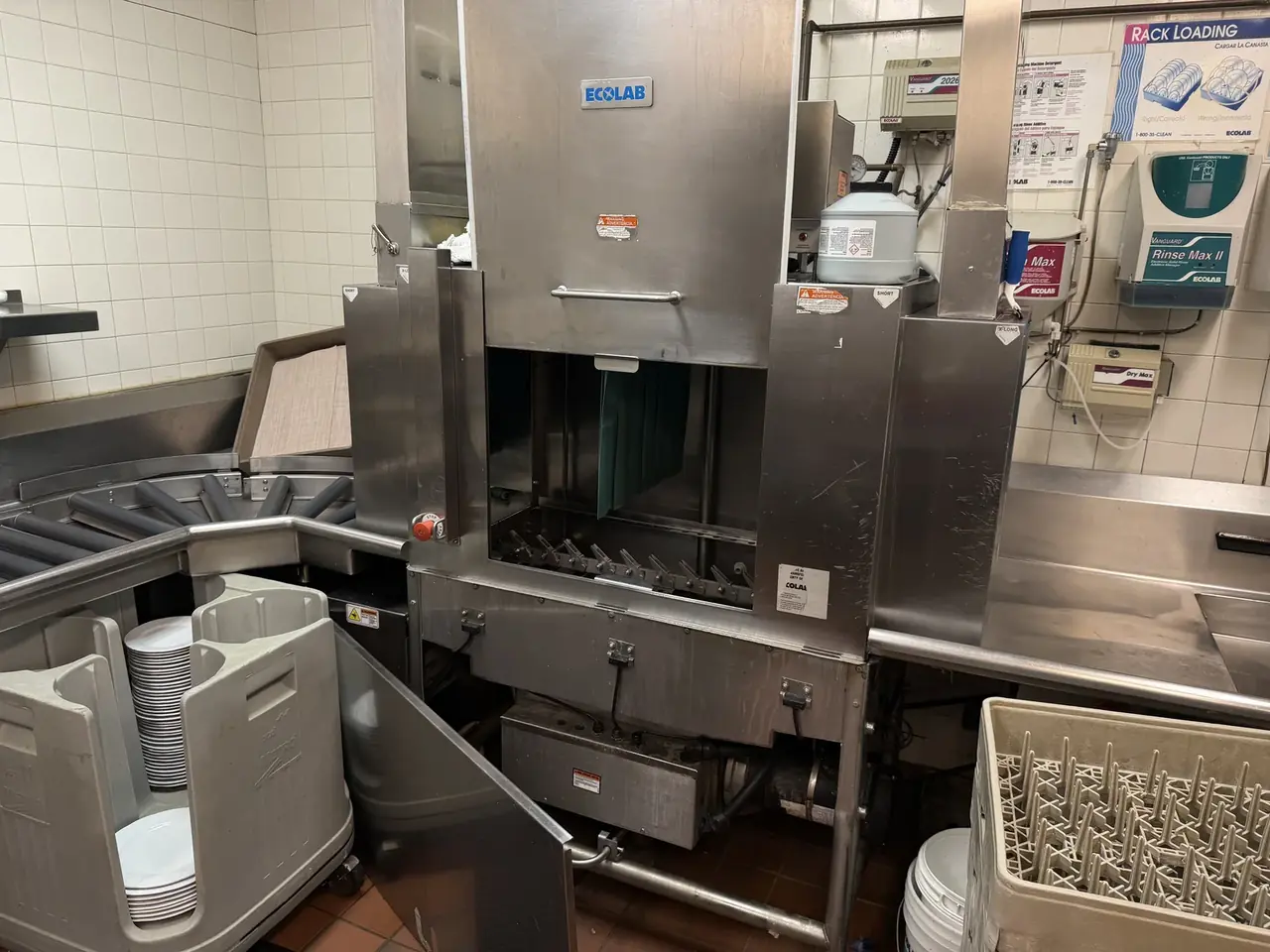
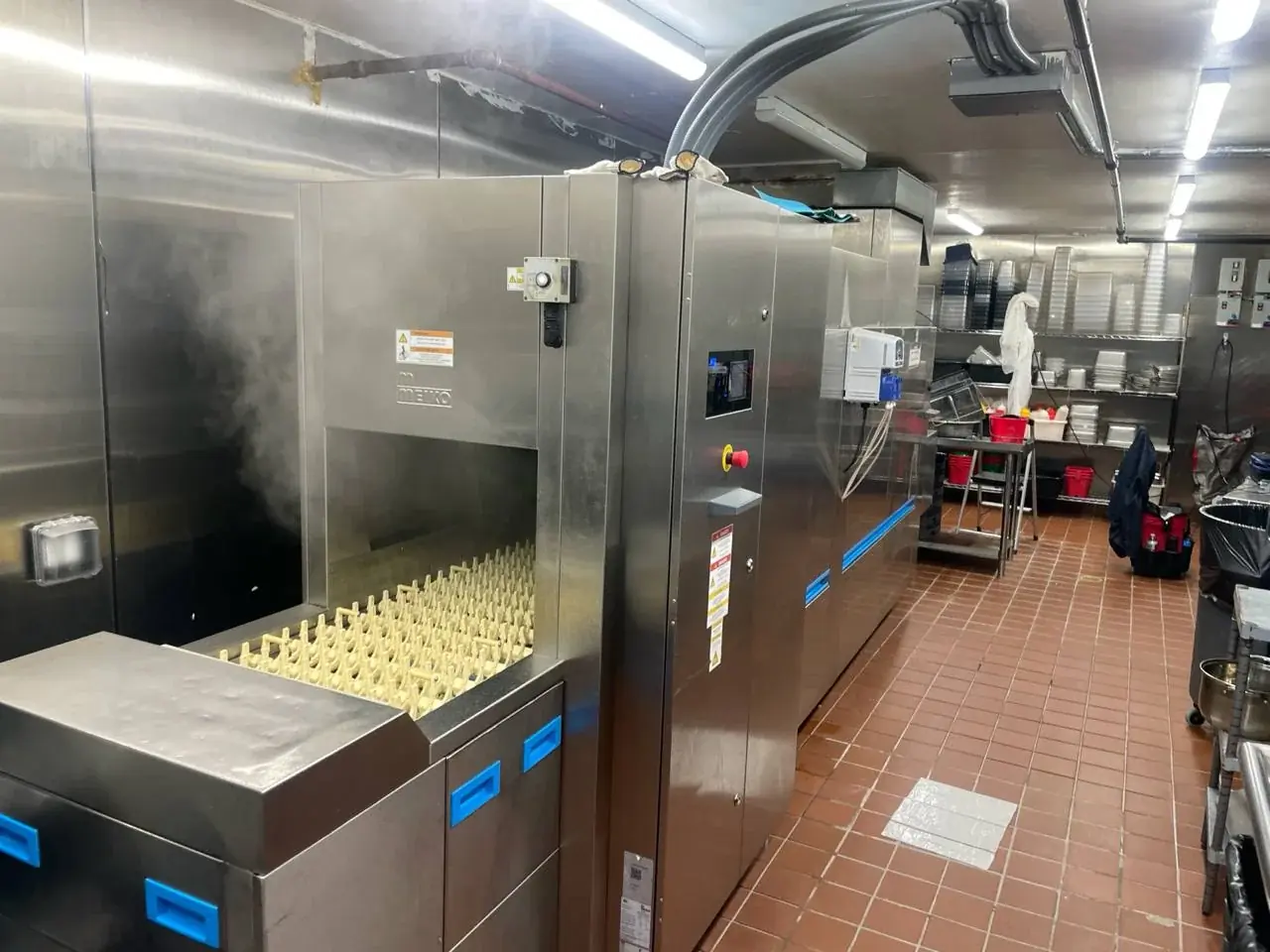
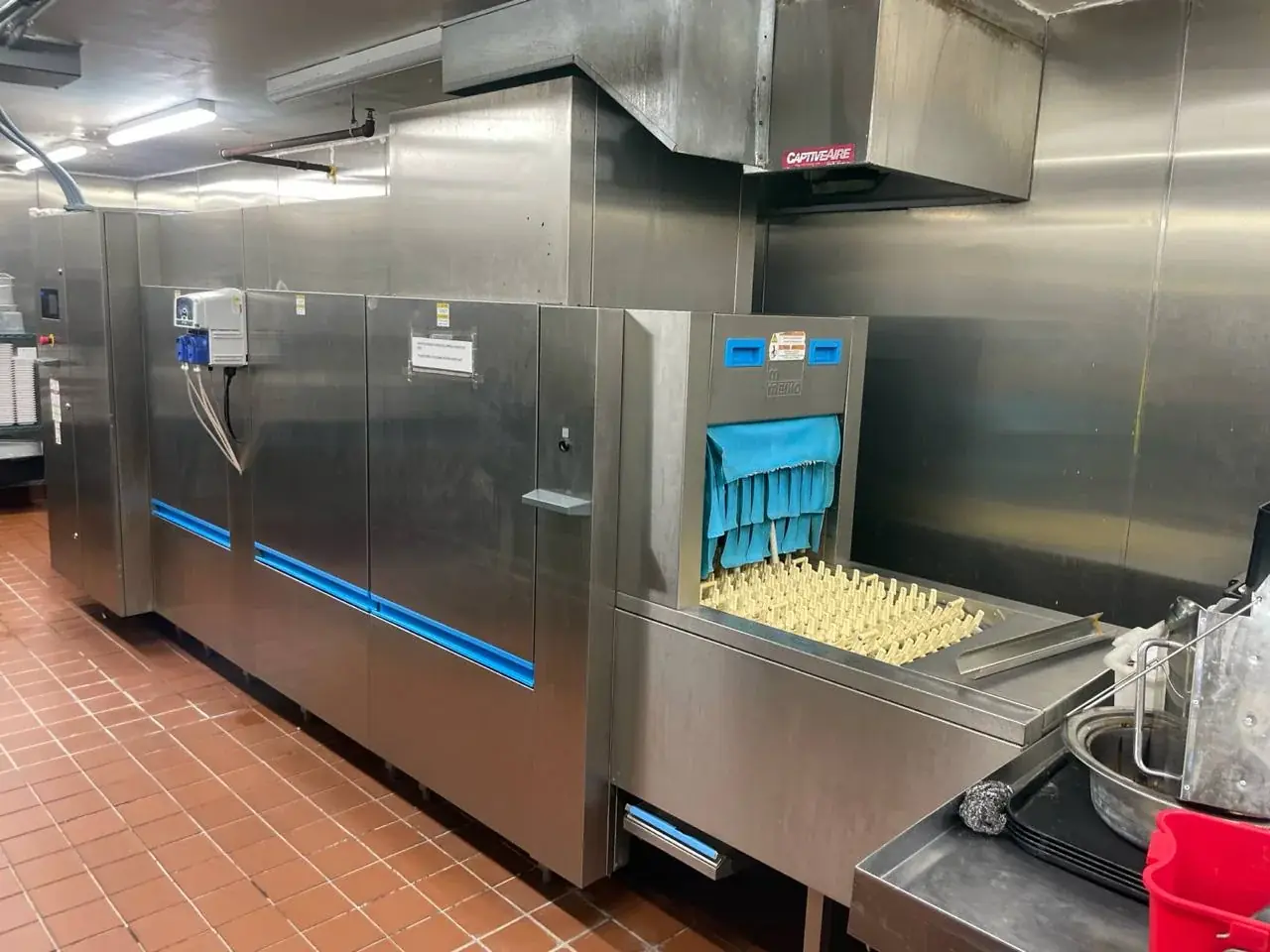
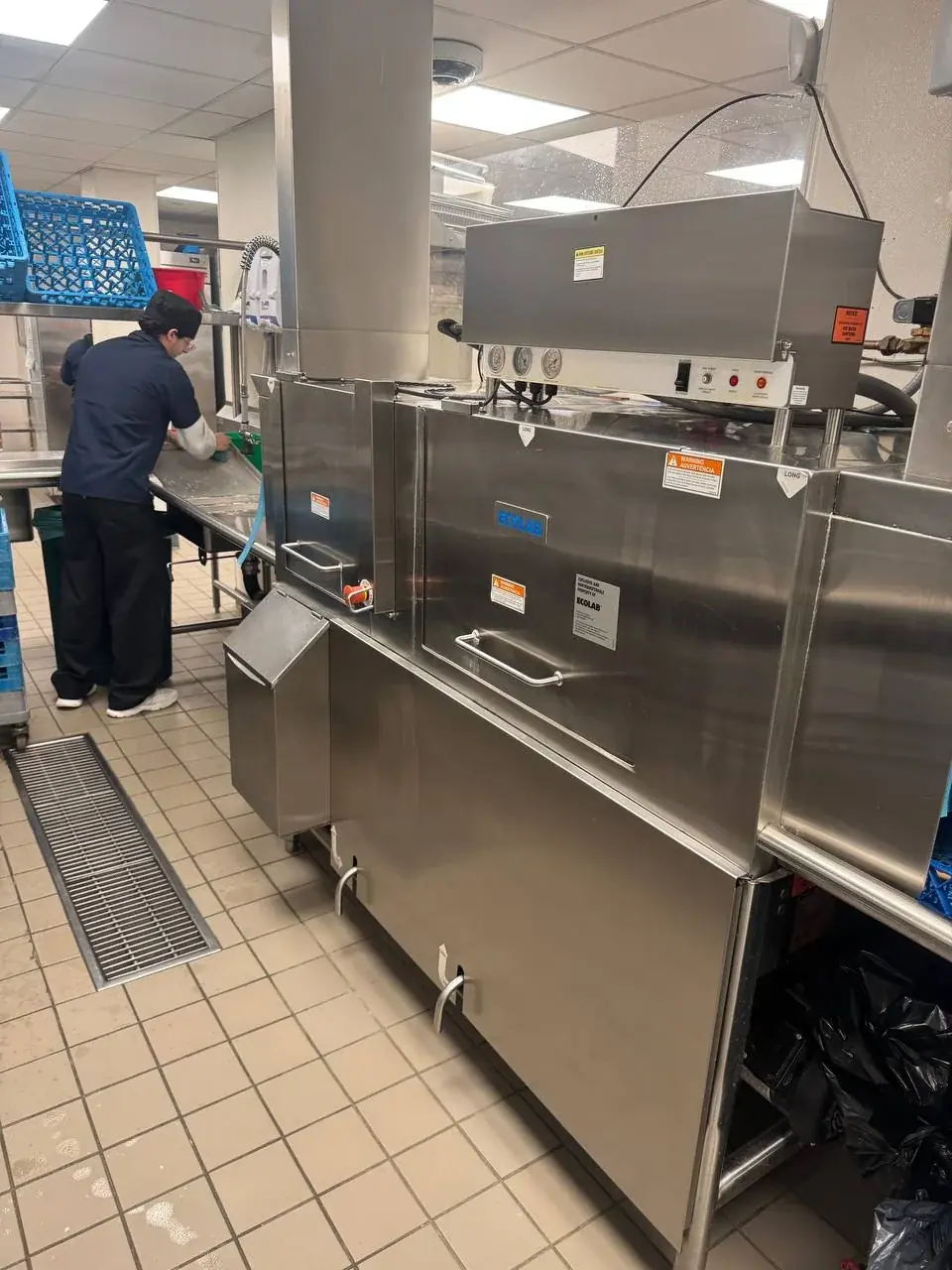
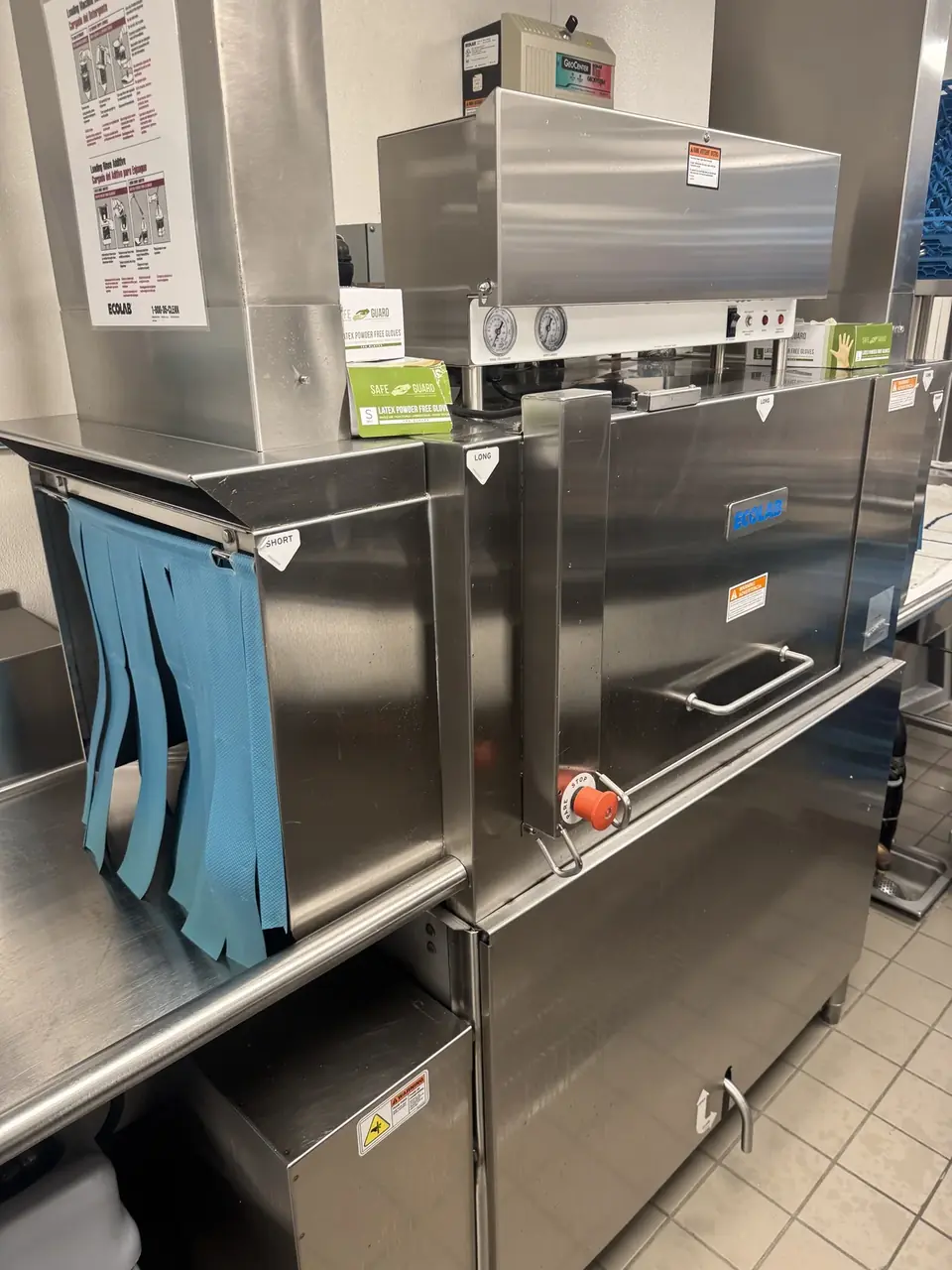
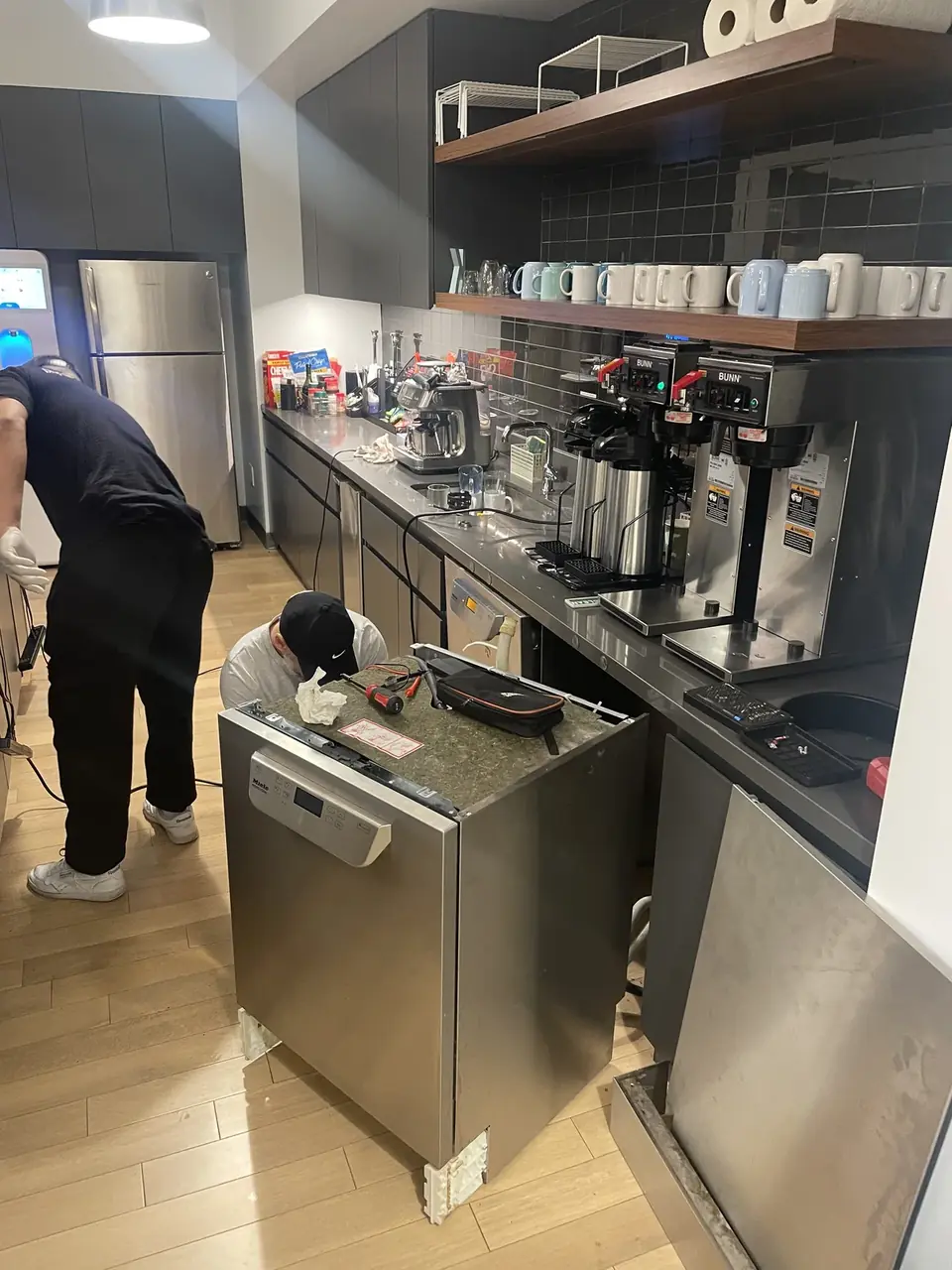
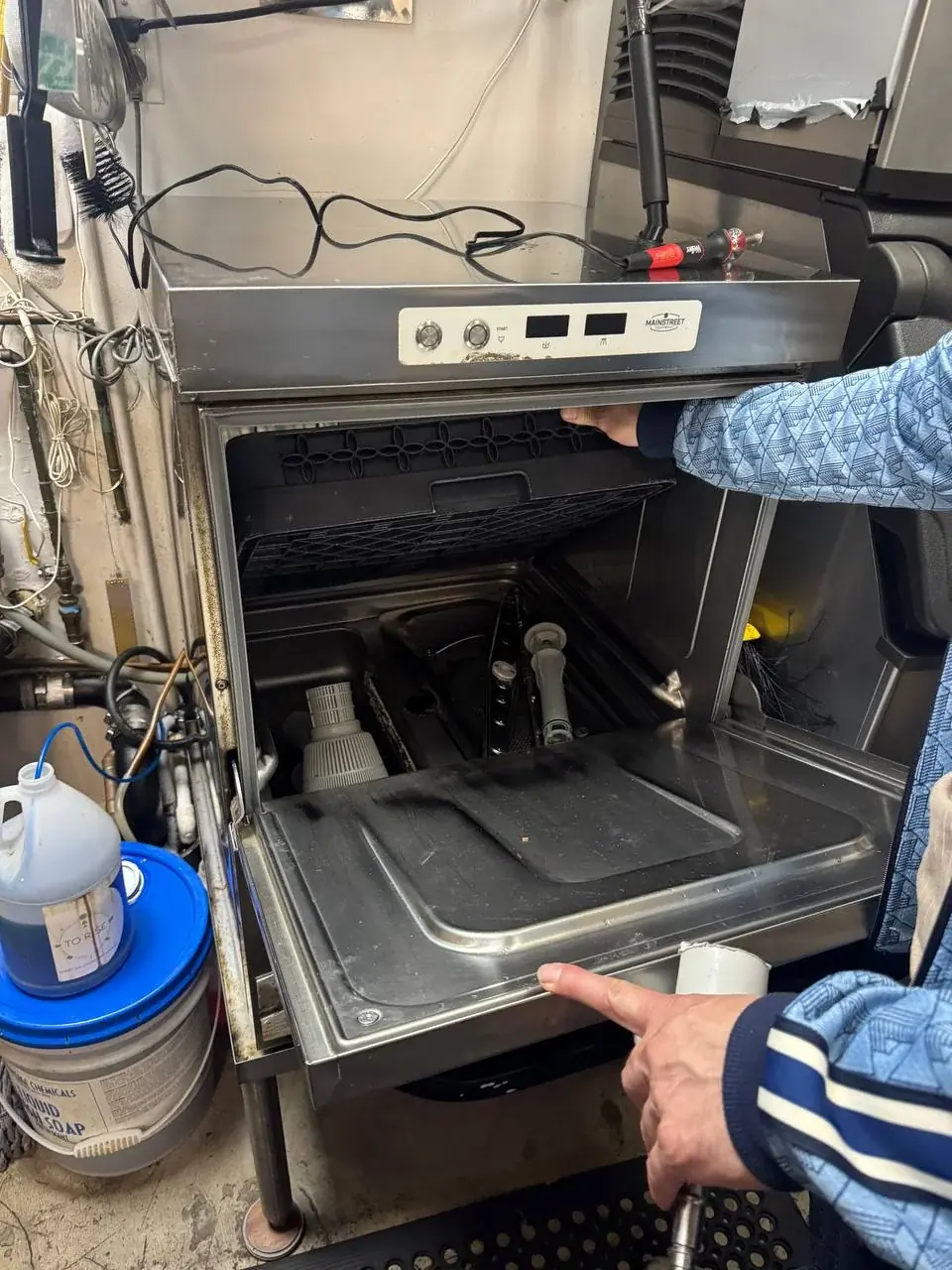
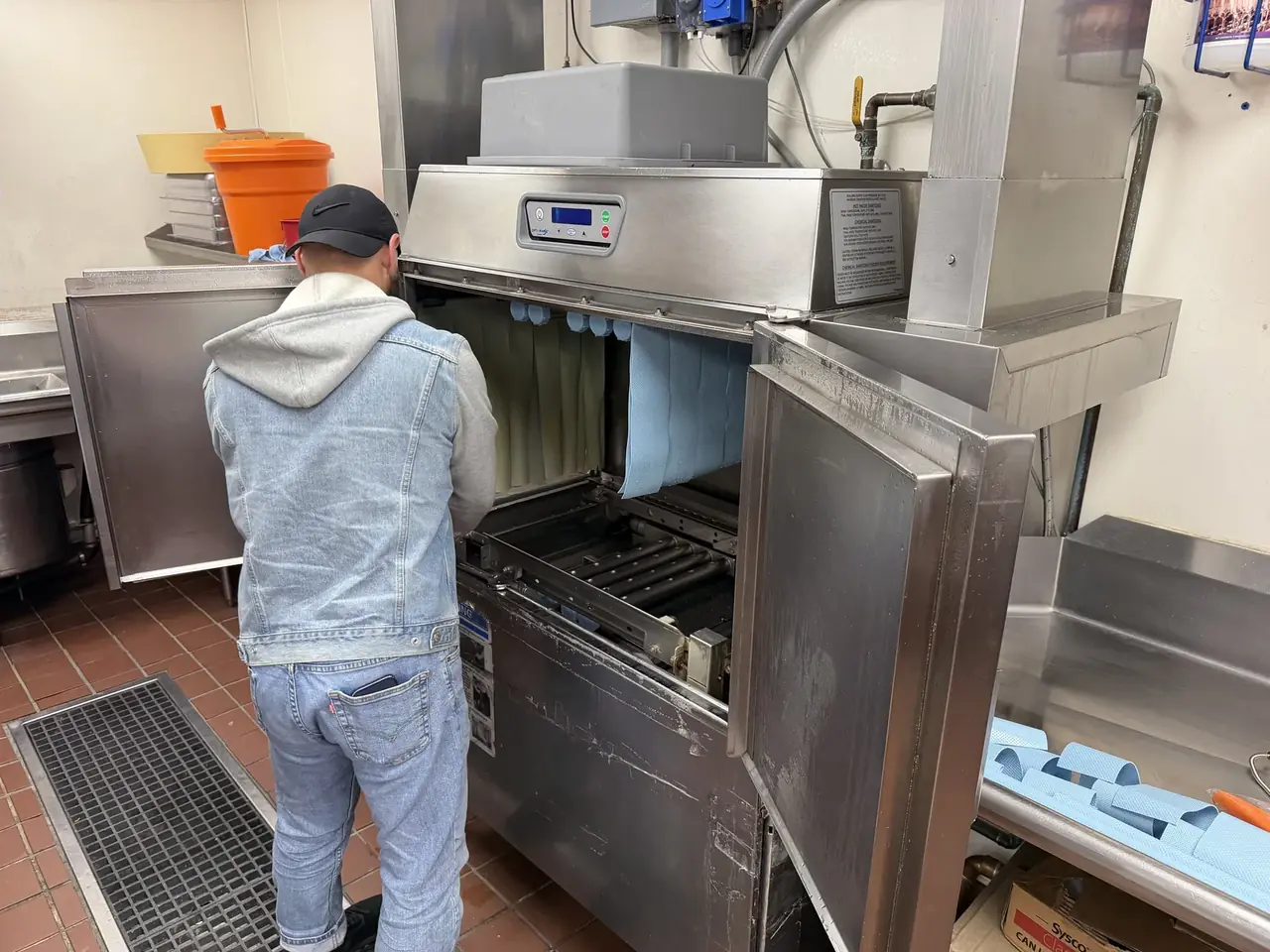
Commercial Dishwashers We’ve Serviced

Dish-room equipment from commercial kitchens where our technicians have worked.

Building access & COI

Building Access & COI Requirements

Many Manhattan buildings require a certificate of insurance and a scheduled access window before a contractor can work on site. Include those details in your request so dispatch can plan the visit.

  • Choose COI Required in the request and upload the building’s requirements or a sample certificate.
  • Tell us the freight-elevator or loading-dock hours and any escort rule.
  • Note where the equipment is, and where its condensing unit or water supply is if that is elsewhere.
  • Mark the equipment as down and choose ASAP if it is urgent.
Call +1 (929) 351-3230

Questions

Commercial Dishwashers FAQ

Do you repair both high-temperature and chemical-sanitizing dishwashers?

Yes. The sanitizing method changes what we test: rinse temperature and booster heater for high-temperature machines, dosing and concentration for chemical-sanitizing machines. The data plate on your machine states which one you have.

The machine runs but dishes are not coming out clean. What do you check?

We check wash temperature, detergent dosing, spray arms and nozzles, scrap screens and rinse pressure. Scale and clogged jets are common, so the machine may also need descaling and cleaning.

Can you fix a chemical dispenser that belongs to my supplier?

We can check whether the machine is receiving and using the chemical correctly. If the fault is inside a dispenser that your chemical supplier owns, we tell you and you will need the supplier’s service for that part.

Do you service glasswashers and undercounter machines?

Yes. Glasswashers and undercounter machines are common in bars and cafés. Choose the commercial dishwasher equipment type and describe the machine in the problem field.

What do I do if a test shows dishes are not being sanitized?

Follow your food-safety plan’s backup procedure for sanitizing until the machine has been checked, and request service marking the equipment as down. Dispatch will call you back.

What machine details help dispatch prepare?

The make and model on the data plate, whether it is high-temperature or chemical-sanitizing, the symptom, and any error code shown on the display.

Related

More Commercial Services

Commercial · Manhattan & NYC

Equipment down? Request commercial service.

Send the equipment details, mark the request ASAP if it is urgent, and attach your building’s COI requirements. Or call dispatch.

+1 (929) 351-3230